
Body Doubling for Studying: Why Working Alongside Others Helps You Start
🔊 Listen to this article
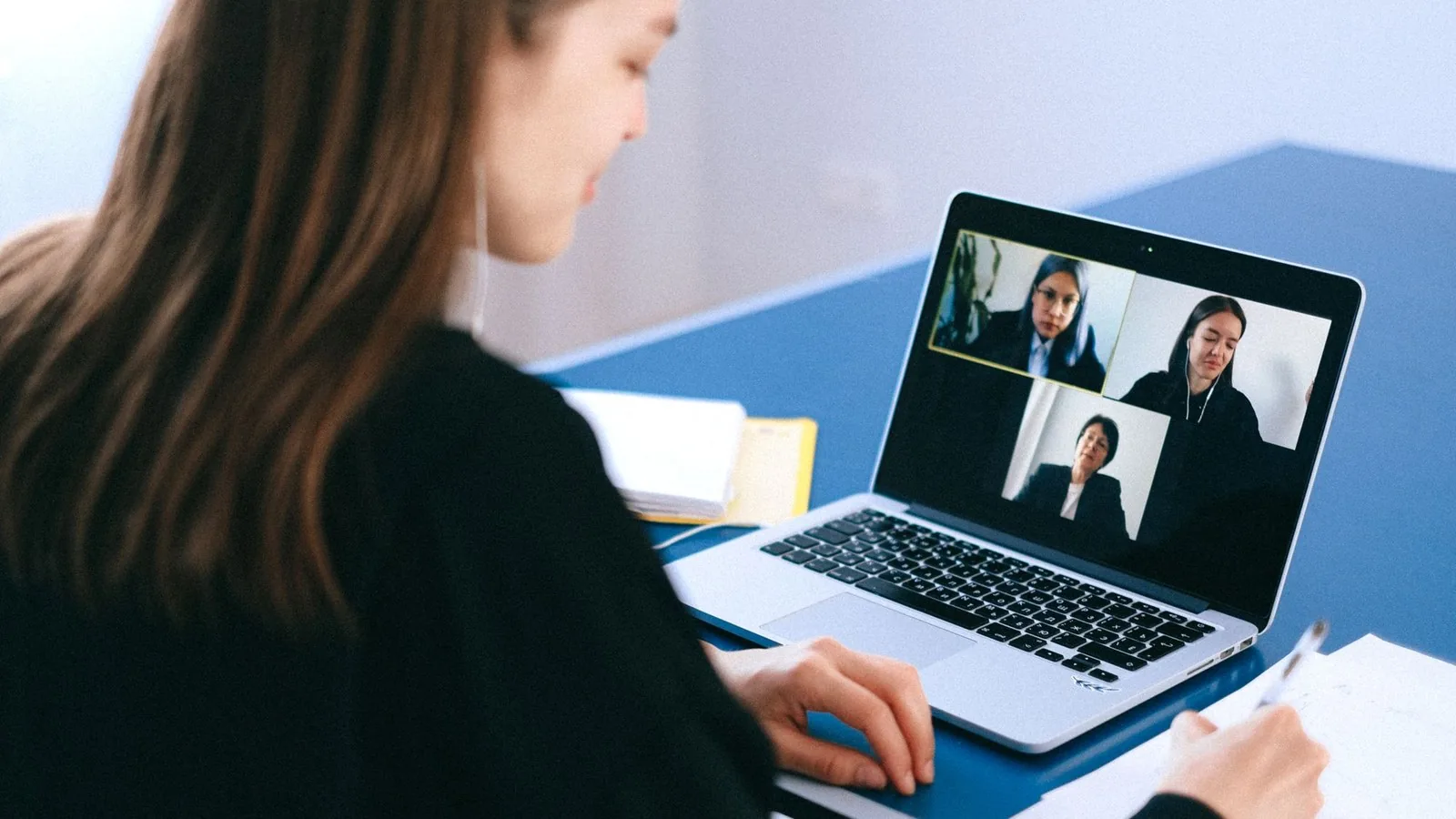
One is often considered the loneliest number. In academic work, it can also be the number that makes it hardest to start. For many, the most difficult part of finishing an assignment is just starting. When working alone, that challenge becomes more significant. If you’ve experienced this scenario, where you sit down to work on a paper, open your document, and twenty minutes later you still haven’t written a sentence, you’re in good company. If you’ve ever noticed that you get more done in a library surrounded versus sitting alone at your kitchen table, you’ve already seen how simply being around others who are working can make a difference, even if you didn’t realize it at the time.
This tactic even has a name: body doubling. Body doubling for studying means starting your work and staying on that task while someone else works next to you. This not only happens in-person, as it works just as well online. Research on writing groups backs this up, as they’ve shown that when students attend regular online sessions, they become more motivated and develop better writing habits. The best part for many is that they show you don’t even have to share your work or talk to anyone to see benefits.
What is body doubling?
A 2024 study described body doubling as using the presence of others to start, stay focused on, or accomplish a task. While body doubling has emerged out of community practice, especially among neurodivergent individuals, it’s only recently started to get more research attention. People report body doubling in cafés, via YouTube videos, in person or online, for everything from studying to chores to exercise. It’s very likely many of us used this strategy long before it had a name.
Body doubling is really about having someone else present, not about getting help, unless you ask for it. No one is there to check your work, assign your task, or to teach you. Just knowing someone else is also working nearby is enough motivation for most people to get their work started. You don’t have to be working on the same thing, or even interact at all. What you work on can be almost anything:
- Reading a textbook chapter or journal articles
- Working through practice questions
- Reviewing notes or making flashcards before an exam
- Drafting, editing, or formatting a paper

My Experience
I’ve always found starting tasks to be a challenge, going back to high school, through college, and even now. It became especially clear during my senior year of college, when the pressure to study ramped up so I could graduate. What helped most was heading to the library, even if the people around me were studying for completely different classes. Just being surrounded by others working made it easier for me to stay motivated and accountable.
Does body doubling work for studying?
Yes, but it works best when you have a well-defined set of tasks you want to accomplish during your session, such as “create note cards to study for chapter 5 Biology quiz”. In practice, body doubling (whether in person or online) is more about the structure it provides and less about willpower. When others are present, people tend to work differently, also known as the social facilitation effect.
If you’re like me, to-do lists only get me so far; body doubling gives you a few things a list on its own can’t:
- A set start time. Whether you’re ready to work or not, a body double session has a set start time, so it’s one less decision you have to make and you have a dedicated time.
- Mild accountability. Knowing someone can see whether you’re working or not makes it harder to wander to your phone or another distraction calling your name for more fun things to do.
- Borrowed momentum. When you may lose some motivation, seeing others continuing to work is a steady cue to keep going, the social facilitation effect in action. When working alone, it’s much simpler to just stop.
- Bounded time. Sessions include a set end time, so the task becomes finishing a stretch of work rather than “studying” with no edge, which many neurodivergent learners can appreciate.
My Experience
Personally, I always did better when I knew I’d be meeting classmates at a set time to study. Some of my most productive studying happened late at night in the library, sitting at an open table next to people I didn’t even know. Seeing so many others working kept me motivated. When I tried to study in my apartment, I’d get distracted by anything and everything else.
Of course, sometimes you need a quieter spot to really focus, write, or (if you’re like me) maybe you work best with music on in your headphones. But if you think that means you have to be completely alone, I’d encourage you to reconsider. Even sitting at a cubicle in the library, just seeing other people studying nearby made a difference for me. Being in the same space, even without talking, helped me stay on track.
The part that gets missed: isolation
Most articles about body doubling focus on productivity, which is certainly useful. But with so much of our time now shaped by technology, body doubling also offers something else: small, reliable doses of company that many students are missing. A survey of 578 students found that those with a stronger sense of belonging reported higher motivation and enjoyment, and that students who often thought about leaving reported a weaker sense of belonging.
Every student wants to graduate, but too many don’t, especially at the graduate and doctoral levels. A big reason is that students lose, or never find, a sense of belonging in their programs, often because they feel isolated. However, isolation doesn’t affect everyone equally. In my experience, it hits three groups hardest, the same groups I often work with at Elevated Consulting Solutions.
- Doctoral students, especially online students. A systematic review of the online PhD experience concluded that completing a doctorate online is more isolating than doing it on campus. Across doctoral education more broadly, a mixed-methods systematic review found isolation was a risk factor for poor mental health and doctoral attrition has held near 50% for a decade, driven by factors from finances to the difficulty of persevering alone.
- Adult and returning learners. These students are often studying online, negotiating their time between school, work and family. A study of 254 online adult learners found that the more they valued peer connection, the more they felt it supported their learning. Also, a study of 40 post-traditional graduates named social isolation as a common barrier to finishing.
- Neurodivergent students. A comparison of 204 students found neurodivergent students reported lower well-being and less enjoyment of study than their peers. For students with ADHD specifically, a survey of 2,517 undergraduates found that the amount of social support, having more people to draw on, buffered the impairment that ADHD symptoms predicted.
The good news is, you don’t have to be in the same room to get the benefits from body doubling. In online learning, just knowing that real people are there with you (what researchers call social presence) matters. A meta-analysis of 25 studies found that social presence is linked to both satisfaction and a sense of learning. Even spending an hour a week where you can see others working on their own projects can help bring some of that presence back.
Does virtual body doubling work?
A 2025 survey of Gen Z college students who studied along to “study with me” videos showed the central role of peer support in online educational experiences. The authors suggest that the shared presence of peers may also ease feelings of isolation and help meet students’ needs for social interaction and emotional support. Additionally, a 2025 experiment with 60 students found that studying along to such a video actually produced more accurate work than being physically next to them.
It even works if you don’t turn your camera on! In a 2021 survey about cameras in online classes, students said their top reasons for keeping cameras off were concerns about appearance and what’s in the background. Sessions that let you keep your camera off remove the biggest barrier, so you can join in with your microphone and camera off, and still work alongside everyone else.
| The worry | What the research suggests | What to do |
|---|---|---|
| “People will see my work” | Body doubling sessions are for working in company; nobody reviews what you bring | Choose a platform where you don’t need to share what you’re working on |
| “I’ll feel watched on camera” | Appearance and background are the top reasons students keep cameras off | Choose one where the camera stays off unless you want it on |
| “Other people will distract me” | Company helps steady tasks and can slow brand-new, complex ones | Bring a well-defined task that gives you progress; save new concepts that need deeper thinking for a different time |
| “It’s only for ADHD” | The idea behind body doubling, working better near others, shows up for students in general | Try one session and judge it for yourself |
How to try body doubling for studying
- Choose a task you can finish in one sitting, and name it as an action, like “read ten pages”, instead of just “study.”
- Join a session where people work side by side. We host a free one called the Focus Room, a live, online co-working hour for students at any level.
- If you feel comfortable, share your goal at the start, and type it in the chat. Saying it out loud (or in writing) makes it harder to drift away from what you set out to do.
- At the end, jot down a quick note about where you’ll pick up next time.
My Experience
I started the online Focus Room for anyone who feels isolated in their studies and would rather have some company while getting academic work done. I benefited from body doubling myself in college, though I didn’t know it had a name at the time, and it helped me finish my degree. I also know how tough it can be to juggle school, work, family, and everything else life throws at you. Sometimes, forming an in-person study group just isn’t possible. The Focus Room is a way to find community that fits your schedule.
Frequently asked questions
Is body doubling only for ADHD?
No, though body doubling for ADHD is where the term is best known, because getting started is such a common hurdle for many neurodivergent students, particularly for ADHD and autistic students. All students can use the concept: working better when others are present.
Does body doubling only work for writing?
No. The 2024 survey of people who use it found it applied to studying, chores, and exercise alike, not just writing. It fits any steady, well-defined task: reading, practice problems, exam review, organizing notes, or clearing admin.
Can you body double without a camera?
Yes. Body doubling works because you know others are working at the same time, not because you’re being watched, so camera-off sessions work. Surveys of online classes show that appearance concerns are the top reason students keep their cameras off, so making the camera optional removes the main barrier. You can join with your microphone and camera off and still get the effect.
Where can I find free virtual body doubling?
Free virtual body doubling is easier to find than it used to be. Some universities run online study or writing groups, “study with me” streams run all day on video platforms, and a few communities host live sessions. We also run the Focus Room, a free, live co-working hour on Microsoft Teams for students at every level, with an optional camera and no need to share anything you don’t want to.
Is there a body doubling app, or do I need one?
You don’t need an app. Paid body-doubling apps and websites exist, but the core of the method is other people working at the same time, which a free video call or live session already provides. Start with something free, a study partner, a “study with me” stream, or the Focus Room, before paying for a subscription.
What is the difference between body doubling and a study group?
A study group works through the same material together; body doubling means working on your own task alongside others doing theirs. There’s no shared assignment, no discussion, and no one teaching, which keeps it low-pressure and fit for almost any task. If you want company without having to coordinate, body doubling is the lighter option.
Your next step
Body doubling won’t do the work for you. It makes the first ten minutes easier and adds company to hours often spent alone, and for many students, those minutes decide the day. Bring one small task to a session and see what an hour of company does.
If starting is a daily struggle rather than an occasional one, or the isolation behind it is wearing you down, that’s what online academic coaching is built for, and it’s worth a longer conversation.
Sources
Every source below is also linked inline at the point where its finding is used.
- Castelli, F. R., & Sarvary, M. A. (2021). Why students do not turn on their video cameras during online classes and an equitable and inclusive plan to encourage them to do so. Ecology and Evolution, 11(8), 3565–3576. https://doi.org/10.1002/ece3.7123
- Eagle, T., Baltaxe-Admony, L. B., & Ringland, K. E. (2024). “It was something I naturally found worked and heard about later”: An investigation of body doubling with neurodivergent participants. ACM Transactions on Accessible Computing, 17(3), 1–30. https://doi.org/10.1145/3689648
- Hazell, C. M., Chapman, L., Valeix, S. F., Roberts, P., Niven, J. E., & Berry, C. (2020). Understanding the mental health of doctoral researchers: A mixed methods systematic review with meta-analysis and meta-synthesis. Systematic Reviews, 9(1), Article 197. https://doi.org/10.1186/s13643-020-01443-1
- Hou, R., Jin, L., He, J., & Wang, J.-L. (2025). Peer support and learning outcomes in “Study With Me” among Generation Z college students: Mediating roles of motivation, test anxiety, and self-efficacy. Frontiers in Psychology, 16, 1582857. https://doi.org/10.3389/fpsyg.2025.1582857
- Kennedy, L. J., Richdale, A. L., & Lawson, L. P. (2025). A comparison of neurodivergent and non-neurodivergent students’ characteristics and higher education experiences in Australia and New Zealand. Autism in Adulthood. Advance online publication. https://doi.org/10.1089/aut.2024.0159
- Melián, E., Reyes, J. I., & Meneses, J. (2023). The online PhD experience: A qualitative systematic review. The International Review of Research in Open and Distributed Learning, 24(1), 137–158. https://doi.org/10.19173/irrodl.v24i1.6780
- Mensah, F. (2025). The 50% tipping point: Addressing doctoral student attrition through institutional innovation. Journal of College Academic Support Programs, 7(1), 50–54. https://doi.org/10.58997/7.1pp1
- Pedler, M. L., Willis, R., & Nieuwoudt, J. E. (2022). A sense of belonging at university: Student retention, motivation and enjoyment. Journal of Further and Higher Education, 46(3), 397–408. https://doi.org/10.1080/0309877X.2021.1955844
- Reeble, C. J., Lefler, E. K., Abu-Ramadan, T., Bodalski, E. A., & Canu, W. H. (2024). Social support in college students with ADHD symptoms: Quantity beats quality in moderating impairment. Journal of College Student Mental Health, 38(3), 519–540. https://doi.org/10.1080/87568225.2023.2202351
- Ren, N., Reynolds, B. L., & Rusk, B. V. (2025). Virtual companionship or flesh and blood: The effects of study-with-me (SWM) videos on learners’ intrinsic motivation, perceived pressure, and performance. Computers & Education, 228, 105243. https://doi.org/10.1016/j.compedu.2025.105243
- Richardson, J. C., Maeda, Y., Lv, J., & Caskurlu, S. (2017). Social presence in relation to students’ satisfaction and learning in the online environment: A meta-analysis. Computers in Human Behavior, 71, 402–417. https://doi.org/10.1016/j.chb.2017.02.001
- Shatila, S. L. (2024). Not alone when I’m feeling stressed: Online adult learner connection and retention. Adult Education Quarterly, 74(1), 43–61. https://doi.org/10.1177/07417136231184570
- Spencer, G., Case, C., & Chen-Bendle, E. C. (2025). Navigating higher education “nontraditionally”: Opportunities and obstacles in post-traditional college pathways to the baccalaureate. AERA Open, 11, Article 23328584251343847. https://doi.org/10.1177/23328584251343847
Leave a Reply